


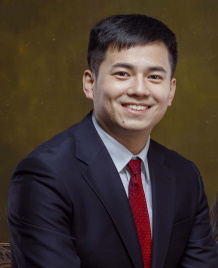
Dr Pengcheng Liu
Senior Lecturer
Interests
My research lies at the intersection of robotics, machine learning and biology, with a strong emphasis on translating the adaptive and resilient principles of living organisms into robotic architectures. By studying and abstracting these biological mechanisms, I aim to design and develop autonomous systems that exhibit lifelong learning, robust adaptation, and explainable, trustworthy behaviours in uncertain and dynamic environments.
A central objective of my research is to advance the foundations of lifelong learning and autonomy, addressing not only adaptation and resilience but also the ability of robots to provide explainable, transparent justifications for their actions, which are crucial for building trust in human-robot collaboration. Specifically, my work focuses on:
- Enhancing multimodal sensory-motor integration and learning capabilities, enabling robots to adapt continuously across diverse tasks and environments rather than relying on static, pre-programmed behaviours.
- Modelling and transferring biological excellence by capturing human and animal strategies for optimised motion generation, perception-action coupling, and decision-making into algorithms for autonomous robots and intelligent systems.
- Optimising system morphology and control architectures for behavioural diversity, selectivity and resilience, ensuring systems maintain operational capability even in the presence of failures or unforeseen challenges.
- Developing adaptive and learning frameworks inspired by biological processes (e.g., neural networks, immune systems, neural plasticity), allowing for incremental knowledge acquisition and avoidance of catastrophic forgetting over long-term deployments.
My application domains span human-robot interaction, collaborative agriculture and aquaculture automation, environment monitoring and control, soft robotics with novel actuation strategies, rehabilitation and assistive robotics, and embodied artificial intelligence. Across these domains, I pursue the integration of machine learning-based and/or bio-inspired design principles with explainable AI frameworks, creating robotic and intelligent systems that are intelligent, accountable, and capable of evolving over time in alignment with user needs and societal expectations.
Qualifications
- PhD in Robotics and Control
- MSc in Control Theory and Control Engineering
- BEng in Measurement Control and Instrumentation
Career
- Senior Lecturer (Associate Professor) in Robotics and Applied Control, 2023 to present, University of York.
- Lecturer (Assistant Professor) in Computer Science, 2020 to 2023, University of York.
- Senior Lecturer in Engineering and Design Technology, 2018-2020, Cardiff Metropolitan University.
- Research Fellow, 2017-2018, LCAS & LIAT, University of Lincoln.
- Research Assistant, 2016-2017, Bournemouth University.
- Visiting Fellow, 2014-2015, Shanghai Jiao Tong University, China
- Visiting Fellow, 2014-2015, Institute of Automation, Chinese Academy of Sciences, China.
- Member of IEEE, IEEE Robotics and Automation Society (RAS), IEEE Systems, Man and Cybernetics Society (SMC), IEEE Control Systems Society (CSS) and IFAC.
- Member of the IEEE Technical Committee on Bio Robotics, Soft Robotics, Robot Learning, and Safety, Security and Rescue Robotics.
- Member, EPSRC Peer Review College
- Associate Editor, Frontiers in Robotics and AI.
- Academic Editor, Robot Learning.
Departmental and University Roles
- Graduate Chair
- Regional Advisory Board Member
Contact details
Phone: +44 (0)1904 325548
Office: CSE/137E-mail: Send e-mail using web form
Research Group: